Words with Foxy
- 4.4
- Rating
- 50.00K
- Installs
- Free
- Price
 Analysis by App-foxy
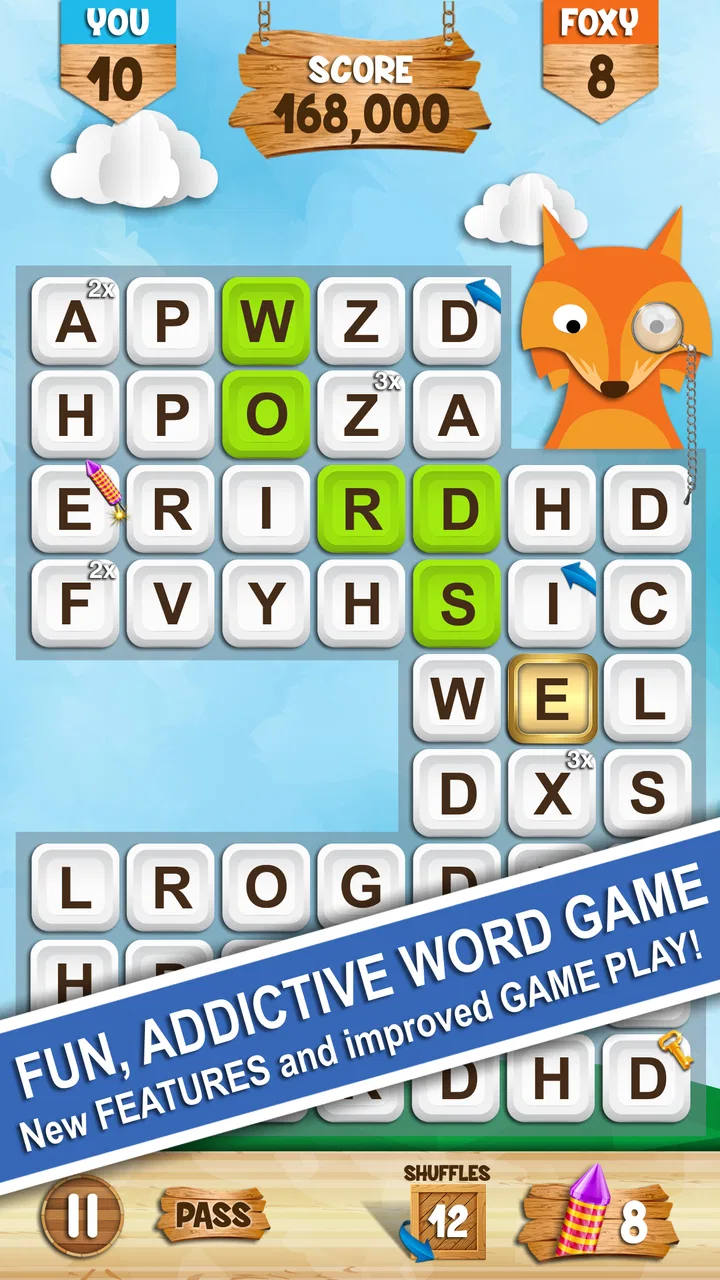
I approached Words with Foxy expecting a light word game, but its real appeal is more specific: it gives me a direct way to test how comfortable I am with word challenges by putting me against Foxy. That makes it feel less like a passive vocabulary exercise and more like a small personal benchmark I can return to when I have a few spare minutes.
It is a free game in the word category from DonkeySoft Inc., rated for Everyone. The game has been available since June 26, 2017, and its current version is 2.2.82. It supports Android 7.0 and later, so it remains accessible on many older devices. There are optional in-app purchases ranging from $1.49 to $11.99 per item, which is worth remembering if you prefer to keep every part of a free game completely separate from spending.
Where players usually get stuck
The first challenge is not necessarily the wordplay itself. It is understanding what kind of experience this is. The store summary presents it as a way to gauge your word-game skill against Foxy, and that framing matters. I would not treat it as a full language course, a dictionary replacement, or a large social word-game platform. Its strongest use is quick competitive practice and a simple test of how efficiently you can recognize or form words.
You May Also Like

 Blood Strike: 2.5 Anniversary
Blood Strike’s Loadouts Turn Every Drop Into a Tactical Gamble
A close look at Blood Strike’s custom loadouts: how fast access to signature weapons reshapes its battle royale rhythm, rewards preparation, and narrows the gap between fights.

 Pandora - Music & Podcasts
Pandora’s Music Is Easy to Start, but Harder to Recover
Pandora’s strength is its low-effort path from a seed to a station. Its weak spot is how much confidence it asks you to place in connection, setup, and quiet recovery.

 8 Ball Pool
 Is Built on Rivalries, Rematches, and Routine
A close look at the rivalries, rematches, shared routines, and unanswered safety questions that turn a quick pool match into a persistent mobile community.

 Samsung Music
’s Quiet Strength Is Playing What You Already Own
Its reach comes less from spectacle than from dependable access to a personal library. That simplicity is both the app’s strongest retention engine and its ceiling.

 AccuWeather: Weather Radar
AccuWeather Review: A Quick, Clear Forecast for Everyday Decisions
For everyday plans, the best forecast is the one you can understand quickly. AccuWeather makes rain timing, radar, and local conditions easy to act on, with a few trade-offs.

 Hill Climb Racing
Why Hill Climb Racing Still Turns Crashes Into One More Run
A tiny car, a bumpy hill and one more upgrade: Hill Climb Racing keeps resurfacing because its simple chaos makes every near-miss feel personal.
More From Our News Desk
View All News


That distinction helps set expectations. If you want a long campaign with a story, a large collection of modes, or a detailed learning system explaining every mistake, this may feel too focused. I found the appeal stronger when I played with a clear goal: improve my own performance, stay alert, and see whether I could make better decisions the next time.
New players can also get frustrated by the pressure of playing against an opponent, even when the session looks casual. Word games often expose gaps in speed rather than knowledge. I may know a word but fail to see it quickly, overlook a useful combination, or spend too long searching for a clever answer when a simpler one would have been more effective. That is not necessarily a flaw in the game; it is part of what makes the comparison with Foxy useful.
My practical advice is to play the first few rounds as observation rather than judgment. Notice whether your problem is vocabulary, scanning, hesitation, or poor time management. Those are different weaknesses, and treating them all as “I am bad at word games” makes improvement harder. A short session can reveal more when I pay attention to the reason behind each missed opportunity.
What the first sessions reveal
The game works best for people who enjoy compact challenges with a clear opponent. I can imagine opening it while waiting for an appointment, taking a short break from work, or sharing the device with someone who wants a quick word contest. It does not demand the commitment of a long-form puzzle game, and that makes it easier to fit into an ordinary day.
At the same time, the competitive structure may not suit someone looking for a calm, completely consequence-free vocabulary activity. Even a friendly opponent changes the mood. I found myself making different choices when I was trying to perform well rather than simply experimenting with words. Players who dislike comparison may prefer a solo word puzzle with no rival to beat.
One useful habit is to separate “known words” from “playable words.” In a normal conversation, I might value unusual vocabulary. In a timed or opponent-based game, a familiar word that I can spot immediately may be more valuable than an obscure word that takes too long to find. That shift in thinking is one of the more practical lessons I took from playing.
Setup checks before blaming the game
Because the game supports Android 7.0 and newer, the first check is compatibility. A device running an older system will not be a good candidate, while a newer phone or tablet should be evaluated more by its general condition than by the game’s age. If installation or updating behaves strangely, I would first confirm the operating system, available storage, and whether the device can install other applications normally.
I also recommend checking that the game has finished installing before judging its opening performance. On an older device, the first launch can feel less immediate than later sessions. Closing other demanding apps, restarting the phone, and trying again after a fresh launch are sensible basic steps. These checks do not change the game, but they prevent a device-side slowdown from being mistaken for poor design.
Since the game is free to install, I can try it without paying up front. That is convenient for testing whether its style suits me. However, the presence of optional purchases means I would still look carefully at any purchase prompt before confirming it, especially if a child is using the device. The Everyone rating makes it broadly approachable, but age suitability and spending control are separate questions in practice.
I would also avoid making a purchase simply because an early round went badly. A purchase cannot solve a vocabulary gap, rushed decision-making, or an unstable connection. I prefer to play several ordinary sessions first, decide whether the core challenge is enjoyable, and only then consider whether any optional item is genuinely useful to my routine.
A low-friction way to begin
My preferred setup is simple. I install the game on the device where I am most likely to play, keep the first session short, and avoid multitasking while learning the flow. Word games reward attention, so switching between messages and a round can create mistakes that look like a difficulty problem.
If the display feels cramped, a tablet may be more comfortable than a small phone, particularly for players who need larger text or more space to scan the board. I would not assume that a larger screen automatically improves performance, though. The main benefit is readability and reduced visual strain, not a guaranteed advantage against Foxy.
Another useful check is consistency. I try the game under the same everyday conditions in which I expect to use it: sitting down for a few minutes, playing without interruptions, and using the same device. That gives me a fairer sense of whether the challenge is enjoyable. A game can feel excellent during a focused trial and irritating when played hurriedly between notifications.
Keeping expectations realistic about purchases
The listed purchase range runs from $1.49 to $11.99 per item. I see that as a reason to treat the free version as an evaluation period rather than assuming every optional offer belongs in the normal experience. The important question is not whether a purchase exists, but whether I still enjoy the word challenge without it.
For families, I would enable the device’s purchase protections before handing the game to a child. That is a general device-safety step, not a criticism of this particular title. The Everyone rating makes the game suitable for a broad audience, while spending decisions still need adult supervision.
Recovering a disrupted playing routine
When a session does not go well, I find it more useful to reset my approach than to replay immediately in frustration. A quick restart, a quieter environment, and a deliberate first round can tell me whether the problem was concentration. If the same issue continues, I look at my decisions: am I searching too widely, hesitating over familiar words, or chasing impressive answers instead of reliable ones?
This is where the game can become more valuable than a single casual round suggests. I can use it as a small feedback loop. After a weak session, I identify one behavior to change rather than trying to improve everything at once. For example, I may decide to commit more quickly to words I recognize or to scan for straightforward options before attempting anything unusual. The next session then has a specific purpose.
I would not use repeated losses as a reason to assume that the game is unfair. An opponent-based word game naturally makes small delays visible. If I am tired, distracted, or playing on an unfamiliar device, my results may drop even when the game is functioning normally. A short break is often more useful than immediately starting another round.
There is also a practical difference between improving and merely replaying. If I repeat the same habits, I may become familiar with the interface without becoming better at the word challenge. I get more from a routine in which I play a few focused sessions, note the type of mistake I made, and then return later. That makes the game feel like practice rather than an endless attempt to erase one disappointing result.
Using it in everyday situations
One realistic use is a short commute or waiting-room session, provided I have enough attention to play properly. I would choose it over a longer puzzle when I want mental activity without starting a substantial game. Another situation is a friendly challenge with a family member: the simple premise makes it easy to explain, and the word focus gives both players something concrete to compare.
For language learners, I would be cautious but positive. The game may encourage faster recognition of familiar English words, yet I would not rely on it as a structured vocabulary teacher. A learner could keep a small note of unfamiliar words encountered during play, then check their meanings separately. That turns an entertaining round into a more deliberate learning routine without pretending the game replaces lessons or reference tools.
For experienced word-game players, the value is likely in the opponent test. Someone who already enjoys word puzzles may appreciate having Foxy as a consistent point of comparison. Still, players seeking extensive customization or a large competitive community may find a dedicated multiplayer word platform more suitable. Words with Foxy feels better as a focused personal challenge than as a complete replacement for every other word-game format.
When resetting is not the real solution
If the game appears slow while the rest of the device is also struggling, I would investigate the phone before judging the title. Low storage, too many background apps, an aging battery, or a system that needs updating can affect many games at once. Testing another lightweight app can help separate a general device issue from a problem limited to this game.
Connection trouble should be considered in the same way. If other online services are failing, restarting the game repeatedly may not help. I would check the network, move to a more reliable connection if possible, and try again later. There is no benefit in making a word-game session more stressful by treating a temporary phone or network problem as a personal failure.
Notifications are another overlooked cause of poor play. A message banner or call can interrupt concentration at exactly the wrong moment. For a fair test, I silence unnecessary alerts and play in a stable position. This small change often tells me whether I dislike the game or simply dislike trying to solve words while being constantly interrupted.
When the app is not the right choice
I would skip this game if my main goal were a deep educational program. Its central promise is measuring word-game ability against Foxy, not providing a complete curriculum with lessons, pronunciation practice, or detailed language explanations. A dedicated vocabulary app would be a better match for structured study.
I would also look elsewhere if I wanted a large social experience with extensive player interaction. Words with Foxy is appealing because it keeps the focus narrow, but that same focus can feel limited to someone who wants live opponents, clubs, chat, tournaments, or a broad collection of unrelated modes. A bigger multiplayer word game would offer more variety for that audience.
It may not suit players who want purely relaxing puzzles. The opponent gives the game purpose, but competition can add pressure. If I am playing to unwind before bed, I may prefer a slower word search or a noncompetitive crossword. The right choice depends on whether I want to test myself or simply occupy my hands and mind.
There is a similar trade-off for people who dislike in-app purchases on principle. The game is free, which lowers the barrier to trying it, but optional items in the $1.49-to-$11.99 range mean I would pay attention during use. Someone looking for a completely purchase-free experience may feel more comfortable with a paid game that has no optional spending, even if the initial download costs more.
Who will get the most from it
I think it is best for casual word-game fans, families looking for a quick challenge, and players who enjoy measuring improvement over repeated sessions. It is also a reasonable choice for someone with an older supported Android device who wants a free game that does not require committing to a large, complicated title.
The rating of 4.4 from around 500 ratings suggests that the game has earned a generally positive response, while its install count of over 50 thousand indicates that it has found a real audience without being presented as a massive mainstream platform. I read those figures as encouraging but not decisive. The important question remains whether I enjoy the specific Foxy-versus-player format.
Its Everyone content rating broadens its appeal, but younger players may still need help with purchase controls and device settings. Adults who want to share it with children should explain that a free download can still contain optional spending. That conversation is more useful than assuming an age rating answers every practical family question.
My practical verdict after using it
Words with Foxy is a focused word game that earns its place through a clear opponent and a useful sense of personal comparison. I like it most when I treat each session as a short test rather than expecting a full learning platform or a huge multiplayer ecosystem. The format makes ordinary mistakes informative: hesitation, scanning speed, and overcomplicated choices all become easier to notice.
DonkeySoft Inc. has kept the concept approachable enough for casual players, and the free entry point makes trying it straightforward. The Android 7.0 minimum also helps people with older compatible devices. At the same time, the game’s narrow focus is a genuine limitation. Players who need deep instruction, extensive social features, or a completely pressure-free puzzle will probably be happier with another option.
My recommendation is to install it when you want a compact vocabulary challenge and give yourself several focused sessions before deciding. Play without distractions, avoid judging your ability from one poor round, and use mistakes to identify one habit to change. If that process sounds enjoyable, Foxy can become a surprisingly useful little benchmark.
If you want a game that explains language in depth, offers a broad multiplayer community, or removes all purchase prompts, I would choose a specialized alternative instead. For everyone else, especially people who enjoy quick word contests and honest self-comparison, this free title is worth a try. Its best quality is not endless content, but the simple push to see how quickly and confidently I can find the right words.
FAQs for Words with Foxy
01What is Words with Foxy?
Words with Foxy is a casual word puzzle game centered on creating words from available letters. It is designed for quick sessions, making it suitable for players who enjoy vocabulary challenges without complicated controls. As you progress, the puzzles can become more demanding, encouraging you to think creatively, test different combinations, and improve your word-solving skills while following the game’s fox-themed presentation.
02How do you play Words with Foxy?
Gameplay is based on forming valid words from the letters provided in each puzzle. You generally tap, swipe, or select letters in the correct order, depending on the device and current challenge. Completing words helps you advance, while hints or other assistance may be available when a level becomes difficult. The simple controls make the game easy to understand, although later puzzles require patience and a broader vocabulary.
03Is Words with Foxy free to download and play?
Words with Foxy may be available as a free download, but the exact monetization model can depend on the platform and version you install. Free gameplay can commonly include advertisements, optional purchases, or paid items such as hints and extra attempts. Before downloading, it is worth checking the current store listing for the latest information about ads, in-app purchases, subscriptions, and any restrictions on free content.
04Does Words with Foxy require an internet connection?
The basic word puzzles may work without a constant internet connection, which is useful for playing while traveling or when mobile data is unavailable. However, some features can depend on online access, including advertisements, purchases, cloud synchronization, updates, leaderboards, or event content. Availability may also vary between versions, so you should test the installed game offline rather than assuming every feature will remain accessible.
05Is Words with Foxy suitable for children and all ages?
Words with Foxy can be appropriate for players who enjoy vocabulary games, but suitability depends on the child’s reading ability, the difficulty of the puzzles, and the content shown through advertisements or optional online features. Parents should review the application’s age rating, privacy information, and purchase settings before allowing children to play. Enabling parental controls can also help prevent accidental purchases or access to unsuitable content.
Pros
- Simple word puzzles are easy to learn and suitable for quick sessions.
- The fox-themed presentation gives the game a distinctive
- charming style.
- Progressive challenges can help maintain interest over time.
- Useful for practicing spelling and expanding everyday vocabulary.
- Works well for players who prefer relaxed
- non-competitive gameplay.
Cons
- Some puzzles may feel repetitive after extended play sessions.
- Hints or extra attempts may be limited
- depending on the level.
- The difficulty curve can be uneven between individual puzzles.
- Players seeking multiplayer features may find the experience too solitary.
- Small text or visual elements may be less comfortable on compact screens.

Words with Foxy
Gallery